Going Around Goa
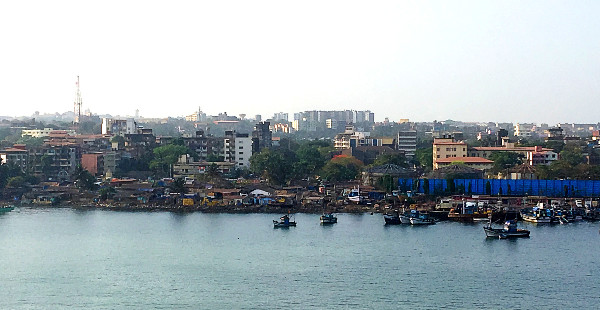
The ship we cruised on during our visit to India was the CMV ship Vasco da Gama, named after the Portuguese explorer who discovered the first direct sea route from Europe around the Cape of Good Hope and across the Indian Ocean to India, opening up the east to European maritime trade. As a reward, he was appointed Governor of India in 1524. So it was with great interest we arrived at the port of Goa, near the township also named in his honour. We knew little about Goa, only that the beaches were supposed to be lovely and that it had been an area favoured by backpackers and hippies. However we were intent on the cultural attractions and had no opportunity to visit the beaches within our time in port. A group of us from the ship took a couple of taxis from the port to check out the main sights.
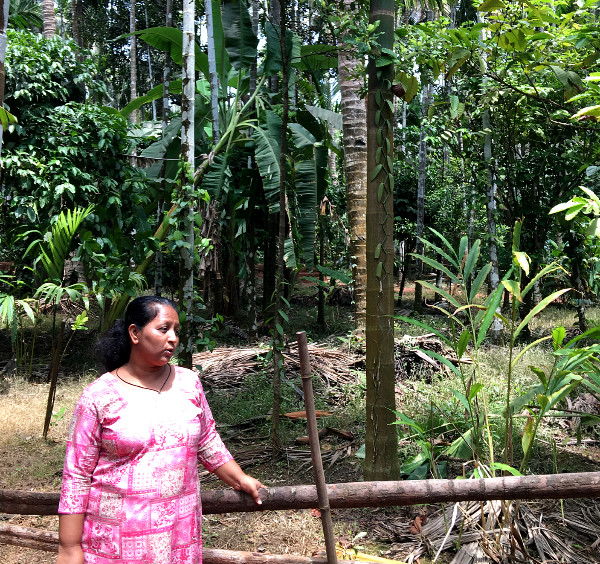
Portuguese access to the Indian spice routes led to a monopoly on the importation of spices to Europe, such as pepper and cinnamon, that lasted for decades. Naturally a visit to a spice plantation, Sahakari Spice Farm, was on our to do list. There, a kind guide took us through a jungle-like environment showing us the various plants that produce the treasured spices, such as the tree orchids that develop vanilla pods, seen on the photo above. Sixty acres of the farm are devoted to the cultivation of spices, fruits, medicinal trees and herbs.
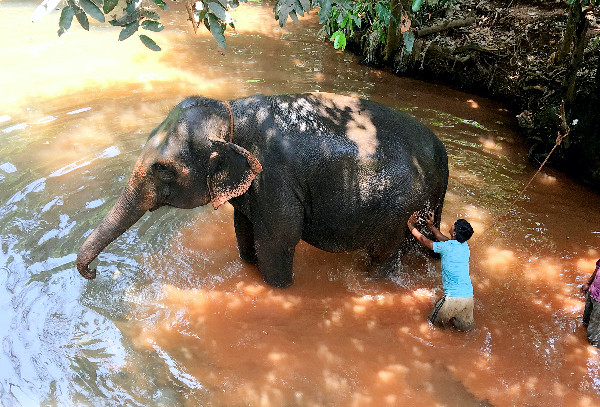
Following the tour we were treated to a traditional Goan lunch showcasing some of the spices and fruits we had seen growing. As we left, we crossed a stream on the property where men were washing a couple of elephants.
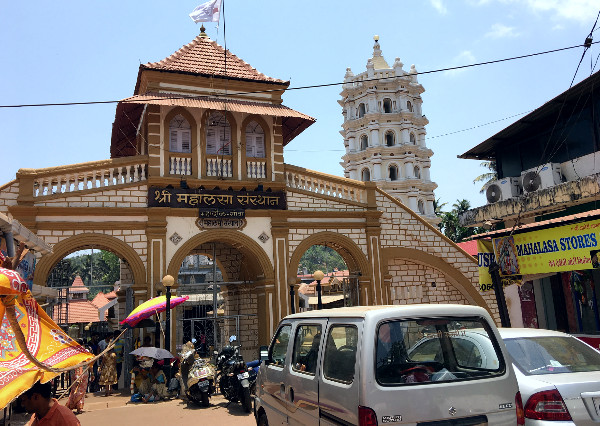
Then it was on to the village of Mardol in Ponda. We were there to visit the Mahalasa Narayani Temple, approached on foot through an unusual gateway.
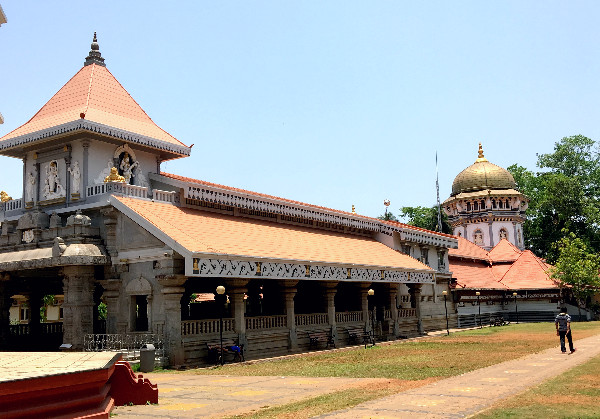
The Mahalasa Narayani Temple is a Hindu temple dedicated to the goddess Mohini, the female avatar of the god Vishnu. The original temple was destroyed by the Portuguese during their attempts to Christianise the people. It was rebuilt in the 17th century. Unfortunately foreigners have been banned from entering the temple buildings.
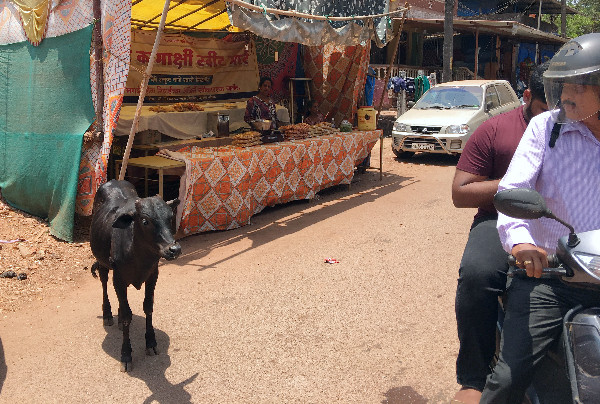
It was our first taste of traffic that included all sorts of erratic vehicles, casual pedestrians and rambling cows in narrow dusty streets. Luckily, the many young steers wandering the streets seemed quite content among the chaos and the locals were adept at avoiding them.
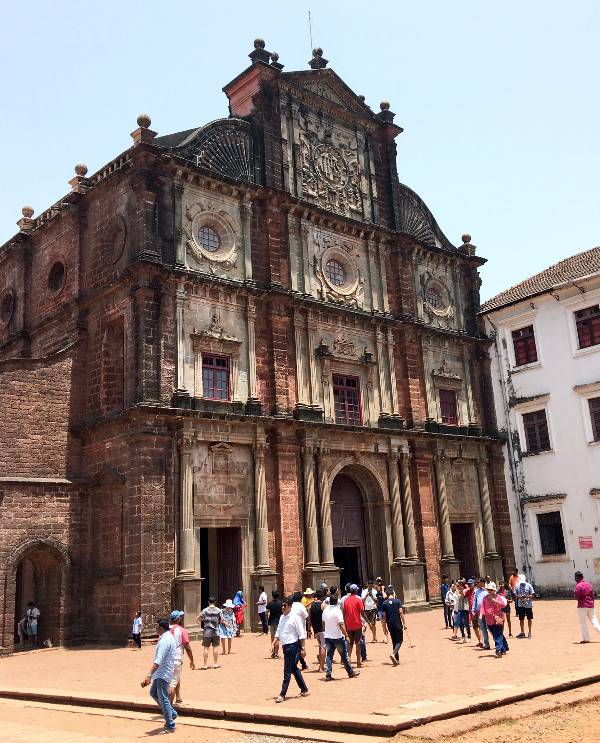
In Old Goa city we visited the Basilica of Bom Jesus, a Catholic church recognised by UNESCO as a World Heritage Site. This basilica holds the body of the missionary St Francis Xavier, Goa’s patron saint, who was based there in the 1540s. The building was commenced in 1594 and was consecrated in 1605. It is an imposing building measuring approximately 56.8m in length, 16.8m in width and 18.5m in height and, as the finest example of baroque architecture in India, one of the most visited sites in Goa.
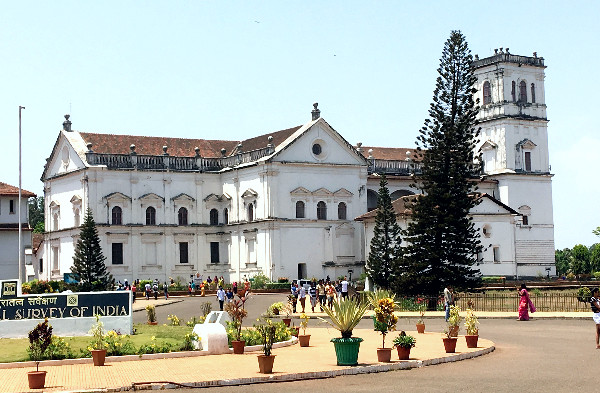
Nearby is the Se Cathedral, also known as the Catedral de Santa Catarina, a Catholic church dedicated to St Catherine of Alexandria. With the basilica it forms part of the World Heritage Site attracting many visitors. Built in the 16th century, it is the largest church in Asia, being about 76m in length, 55m in width and 35m high. This church was built in the Portuguese Manueline style to commemorate Portuguese victory over a Muslim army and the subsequent capture of Goa on the saint’s feast day.
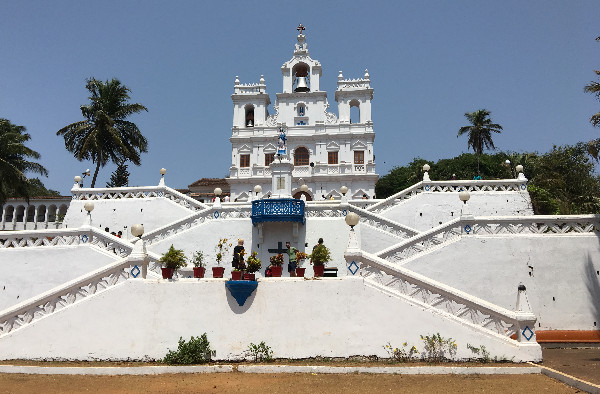
Another ornate baroque church in Goa’s capital city Panjim (Panaji), Our Lady of the Immaculate Conception Church, was also commenced during this period of church building. The stairways were later added in the 18th century. At that time Panjim was a small fishing village and the church mission was to minister to both residents and sailors, since in colonial times this area housed the main port.
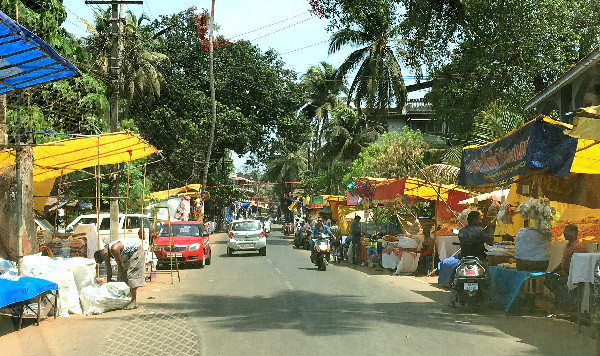
Our port was at Mormugao, one of the oldest in India. As we travelled back to it along the Old Panjim Margao Road we were surprised by the numbers of colourful street vendor stalls. Further out of town we were also surprised by the amounts of rubbish heaped by the roadsides. So far India had been full of surprises and so different from what we were accustomed to. Another port lay ahead – Mumbai – and we wondered what we would find there.