Penang Panoramas
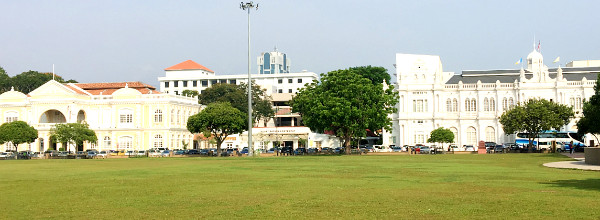
We’ve been to mainland Malaysia before but this was the first time in Penang, Having a full day to wander around Georgetown, I devised a personal walking tour. With another couple from our cruise ship, we set off to see the large buildings we had spied from the ship. The British had officially taken control of Penang back in 1786, and in the late 18th century Fort Cornwallis was built by the British East India Company to safeguard economic interests in the area. From the outside it was basically just high brick walls with the occasional canon peeping through. We passed it by without exploring it further. However the bright white buildings across the esplanade park that were what we had wanted to see – the City Hall and the Town Hall on its right – were very ornate and grand.
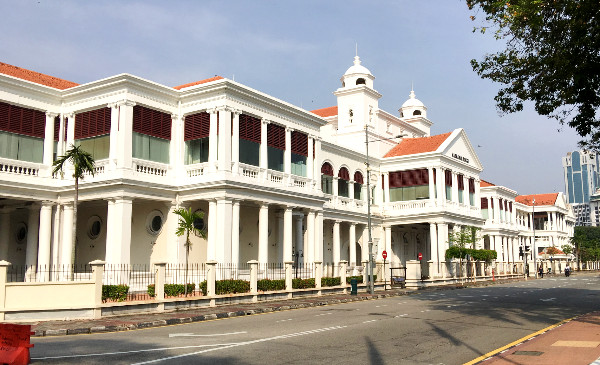
We then headed down Pitt Street (also known as Jalan Masjid Kapitan Keling) where we saw the Penang History Museum and Art Gallery, another glorious relic of the colonial past. It would seem that the locals are very respectful and appreciative of the British contributions to their city, just as they are in their commitment to religious tolerance.
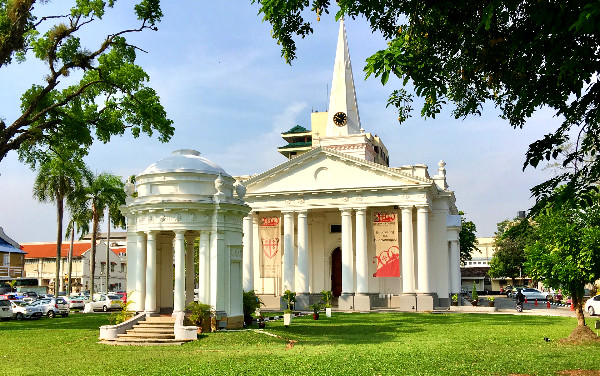
Further down Pitt Steet we came upon the St George’s Church, the oldest purpose-built Anglican church in Southeast Asia. Built by Indian convict labour and completed in 1818, it is a mixture of English and Neo-Classical styles and one of the 50 National Treasures of Malaysia. Although it was seriously damaged during WW2 it was restored in 1948 and again in 2009.
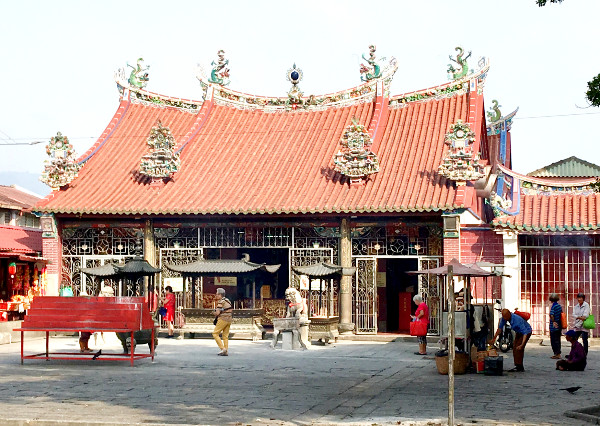
Further along we saw the Taoist Kuan Yin Teng Temple, originally begun by Hokkein Chinese in 1728 for the worship of sea Goddess Mazu. After further waves of Cantonese Chinese, the temple was given a new name and deity, the Goddess of Mercy Temple. Though not the grandest temple in Penang, it is one of the oldest and the most important of the island’s temples, with legend claiming it has magical properties since it has survived several attacks including during WW2. Even the water in its well is supposed to have healing properties.
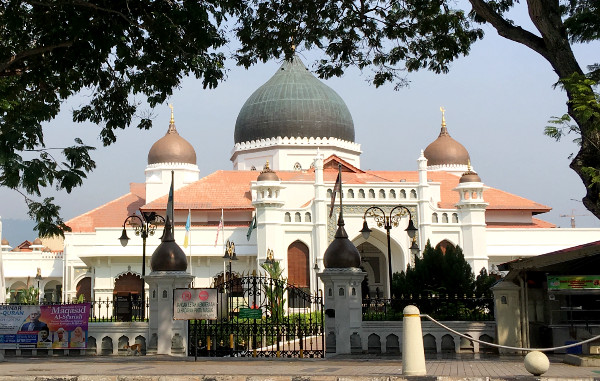
To understand why Pitt Street is also known as the Street of Harmony, and why it has another official name, you only need to look at another religious building there, the Masjid Kapitan Keling. Islam is one of the four main religions on this island. Commenced in 1801, and built by Indian Muslim traders, it displays a mixture of architectural styles such as Moghal, Gothic, Moorish and Roman Renaissance.
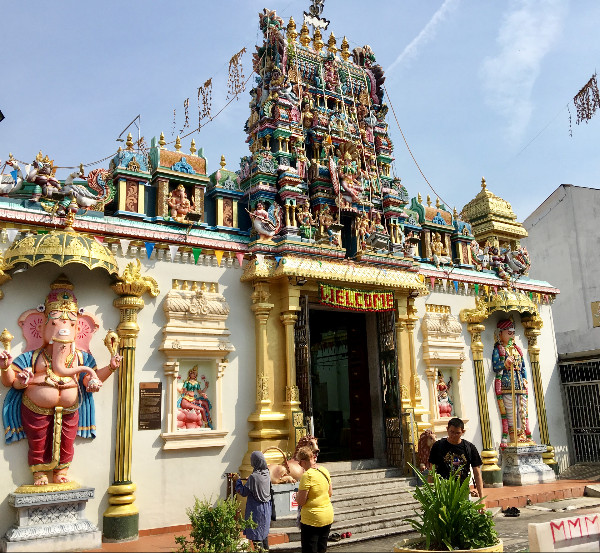
The fourth religious group is that of Hindus. The colourful Sri Mariamman Temple sits between Queen Street and Pitt Street, in an area known as “Little India”. Tamil Indians have been worshipping their Mother Earth deity there since 1833. Built originally as a simple shrine, it features sculptures of gods and goddesses over its main entrance and facade. Behind that there is an elaborately sculptured tower covered in Hindu deities, soldiers and floral decorations.
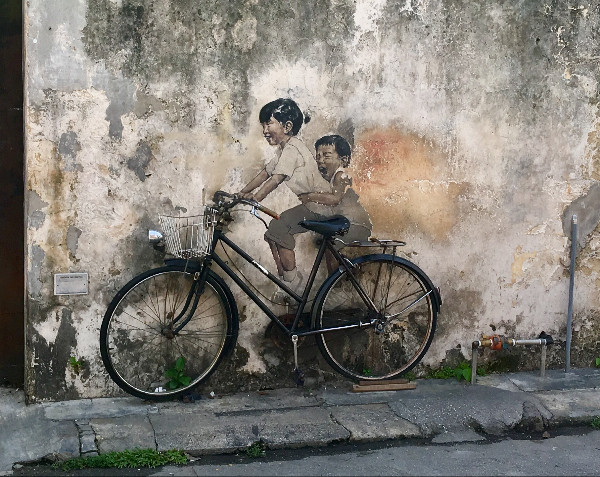
As we walked the streets of this old town, now a UNESCO World Heritage Site, we were entranced by the ubiquitous wall art. The paintings we liked best were those of Lithuanian artist Ernest Zacharevic. After doing small paintings around the town, he was commissioned by the organisers of the George Town Festival 2012 to contribute by portraying the city’s multiculturalism and diversity in a project called Mirrors George Town. “Kids on a Bicycle” is his most famous painting. Sadly, the weather is taking its toll on the vibrancy of many of the paintings.
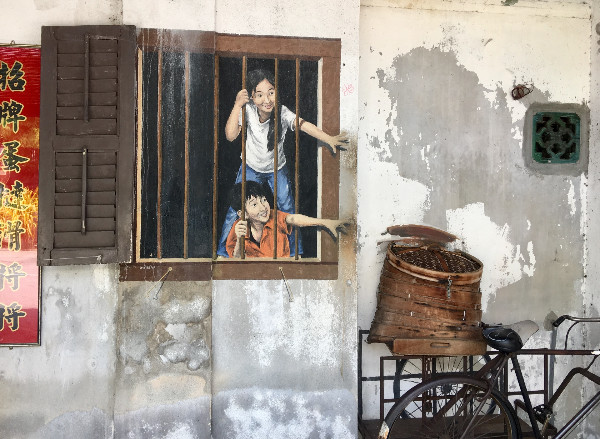
Other artists have mirrored the style or used other media to create their art work. The charm of the art is that it is readily visible at street level and true to size. The three-dimensional characters look so real beside the physical props that form part of the tableau. Tourists, including us, enjoy posing with these works for souvenir photos.
Along the way we stopped at a food stall selling Durian. Our new American friends hadn’t tried this before so we were keen to initiate them. Needless to say, they weren’t impressed by the smell or even the texture, leaving us to finish it off. By now we were all ready for a refreshing drink and lunch, so we stopped at the Jetty Food Court. This time, the Char Kway Teow was found acceptable and finished off with Tiger beer.
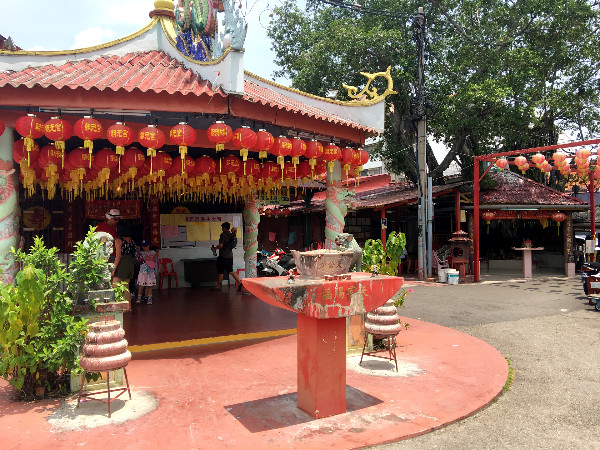
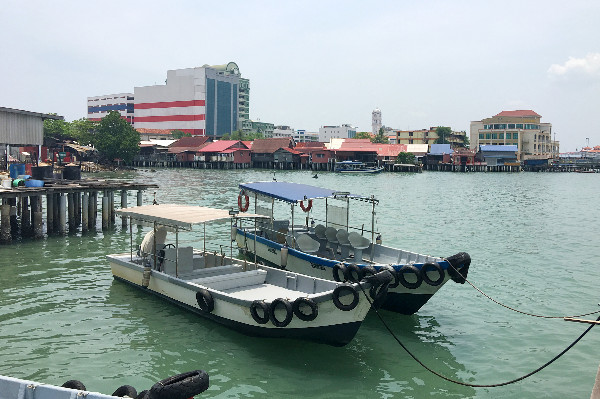
Our final attraction before heading back to the ship was a visit to the Clan Jetties. Located at Weld Quay, they were constructed in 1888 as part of a development project on the quay side of Georgetown. There are several Taoist temples in each clan area. During the Jade Emperor celebration (on the 9th day of Chinese lunar new year) the Chew Clan temple and the nearby Weld Quay area is usually host to the biggest celebration in Penang.
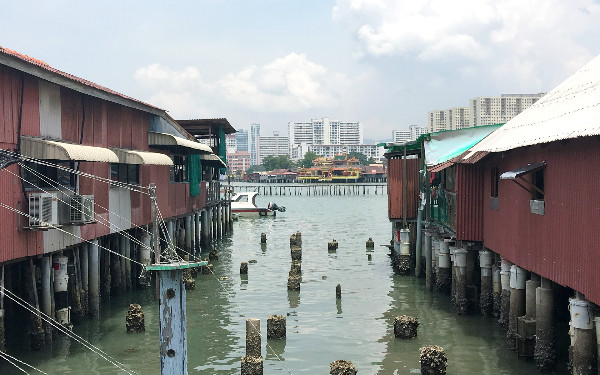
Chew Jetty is one of six wooden Clan jetties in Penang and the most popular to visit. Each of the jetties was named after one of the family groups that built them. Basically houses on stilts over the water, they are inhabited by members of Penang’s immigrant Chinese community. These jetties were often the site of violent rivalry between clans trying to exercise economic control. These days the jetties are no longer used for loading and unloading cargo, but have been developed into shop-houses, attracting many tourists.
Faced with a 15 minute walk back to our ship, on tired legs, we decided to finish our walking tour. Georgetown is a colourful and diverse city, rich in heritage and cultures. There is so much more of Penang I would like to see in the future.